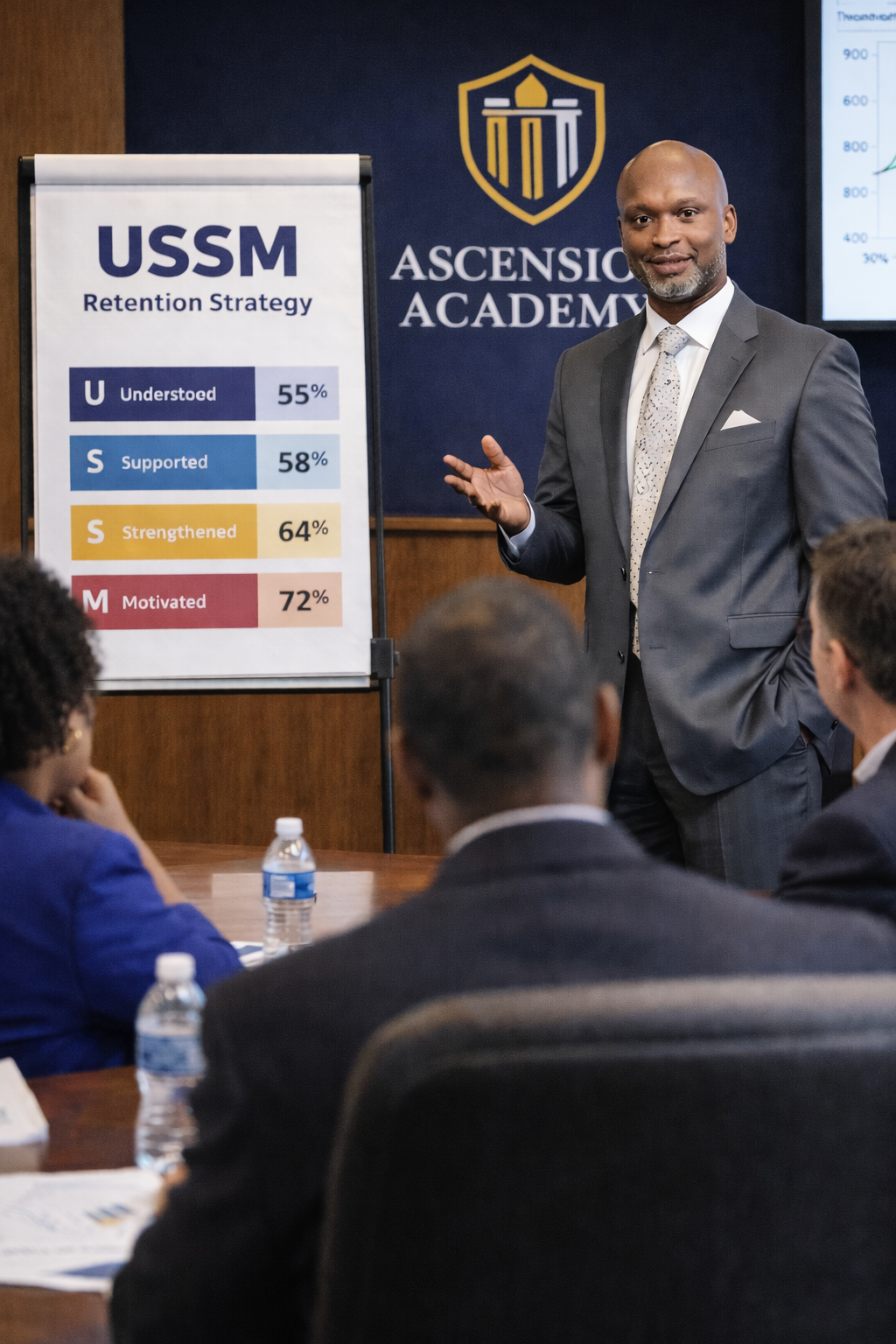
I've spent more than 25 years in senior higher education administration—most recently as Vice President for Enrollment and Student Development. During that time, I've led retention initiatives, prepared for accreditation visits, managed enrollment challenges, and worked to create environments where students could succeed. I know what it's like to sit in your chair. I know what it feels like to have data that tells you students are struggling, but no time to act on it. To prepare for an accreditation visit while simultaneously trying to move the needle on retention. To watch strategic initiatives launch with enthusiasm and fade within a semester because no one was tracking execution. And I know the frustration of working with expensive consultants who delivered polished reports—and then left.
Throughout my career, I never experienced a decline in student retention. Not once. But I achieved that through relentless effort, institutional knowledge, and systems I built myself—often with spreadsheets, determination, and too many late nights. I founded 3-I Innovation because I wanted to give other institutions what I wished I'd had: an integrated ecosystem that doesn't just tell you what to do, but helps you actually do it—and prove you did it. This isn't a company built from theory alone. It's built from practice. The Unified Student Success Model (USSM), Ascension Academy, AchieveLens, AccrediMate, and AligniCore—everything we offer comes from real-world experience, refined over decades, and designed for the challenges institutions actually face. I created 3-I Innovation because I believe every institution deserves access to the frameworks, tools, and support that make student success sustainable—not just aspirational.— Dr. Edward G. Robinson, Founder

Higher education is full of good intentions and fragmented execution. Institutions invest in retention software that generates alerts—but no one has time to act on them. They hire consultants who produce beautiful strategic plans—that sit on shelves. They send staff to conferences and workshops—but the learning doesn't translate to practice. They scramble before accreditation visits—instead of continuously capturing evidence.
The result?